History · Context · Influence

Iran Through Turning Points

A civilization shaped by empire, faith, poetry, architecture, memory, and resilience — told through the moments that mattered most.

A cultural timeline, not a political one

A longer story than the headlines

This timeline does not try to reduce Iran to battles, dynasties, or modern politics. Instead, it traces the moments when Iranian culture was founded, tested, renewed, transformed, and carried forward.

The goal is simple: to help curious readers understand Iran as a living civilization with ancient roots, literary memory, sacred architecture, regional diversity, and everyday human continuity.

Chapter One

Ancient Foundations

c. 550 BCE
01

The Achaemenid Founding

Cyrus the Great and the rise of the Achaemenid Empire mark one of the great beginnings of Iranian history. At its height, this empire connected lands from Egypt and Anatolia to Central Asia and the Indus region.

Culturally, this is where the story of ancient Persia enters world memory: administration, roads, royal centers, imperial diversity, and the idea of Iran as a major civilizational force.

Explore the region around Persepolis →
539 BCE
02

The Cyrus Cylinder

After Cyrus entered Babylon, a clay cylinder was inscribed in cuneiform describing restoration, rule, and royal legitimacy. It is often popularly described as an early statement of human rights, though scholars debate that modern interpretation.

Its importance is not only political. It shows how ancient Iranian kingship was remembered through ideas of restoration, order, tolerance, and sacred responsibility.

Read Iran with more nuance →
518 BCE
03

Persepolis Rises

Founded under Darius I, Persepolis became the ceremonial heart of the Achaemenid world. Its terraces, stairways, columns, and reliefs created a stone stage for empire.

The site still communicates one of Iran’s oldest visual languages: dignity, procession, craftsmanship, and the gathering of many peoples into one imperial imagination.

Connect this story to Shiraz →
330 BCE
04

The Fall to Alexander

Alexander’s conquest ended Achaemenid rule, and Persepolis was famously plundered and burned. It was a rupture that could have ended the story.

Instead, the ruins became part of Iran’s longer memory: proof that power can fall while cultural meaning survives.

Continue to cultural renewal →

Chapter Two

Cultural Renewal

224–651 CE
05

The Sasanian World and Islamic Transformation

The Sasanian Empire was the last great pre-Islamic Iranian state. Its fall and the arrival of Islam created one of the major watersheds in Iranian history.

Yet Iranian culture was not erased. It transformed, adapted, and helped shape a Persian-Islamic civilization through language, administration, art, philosophy, and literature.

Understand transformation, not erasure →
c. 977–1010
06

Ferdowsi and the Shahnameh

Ferdowsi’s Shahnameh, the Book of Kings, preserved and reimagined Iran’s ancient myths, heroes, kings, losses, and ideals in Persian verse.

It is one of the most important works of cultural memory in Iran: a bridge between pre-Islamic heritage and the Persian-speaking literary world that followed.

Receive the poetry collection →
1219–1258
07

The Mongol Invasions

The Mongol invasions devastated cities, dynasties, and centers of learning across the Iranian world. This was one of the deepest ruptures in the region’s medieval history.

But once again, destruction was followed by cultural synthesis. Persian administration, art, manuscript culture, and poetry helped shape the world that came after.

Explore stories of crossroads and memory →
13th–14th century
08

Hafez, Rumi, and the Voice of Inner Life

In the centuries around and after upheaval, Persian poetry reached extraordinary spiritual and literary depth through voices such as Rumi and Hafez.

Their work shows one of Iran’s greatest cultural patterns: the ability to turn uncertainty, longing, exile, and love into language that continues to speak across centuries.

Get the Persian poetry collection →

Chapter Three

Faith, Architecture, and Identity

1501
09

The Safavid Dynasty and the Shia Turn

The Safavid dynasty helped unify Iran and established Twelver Shi‘ism as the state religion. This moment deeply shaped Iran’s religious, political, and cultural identity.

It should be understood carefully: not only as a religious shift, but as a major turning point in how Iran came to imagine itself as a distinct historical and cultural world.

Explore Safavid Isfahan →
1598–1629
10

Isfahan, “Half the World”

Under Shah Abbas I, Isfahan became the Safavid capital and one of the great architectural cities of the early modern world.

Squares, mosques, bridges, gardens, bazaars, tilework, and urban design turned the city into a living expression of Persian beauty, order, and sacred geometry.

Visit the Isfahan guide →

Chapter Four

Modern Turning Points

1905–1911
11

The Constitutional Revolution

Iran’s Constitutional Revolution brought parliament, law, reform, and new political vocabulary into modern public life.

It complicates a common outside assumption that Iran moved directly from ancient monarchy to modern crisis. Iran has its own deep tradition of reform, debate, public life, and constitutional memory.

Understand Iran beyond simple narratives →
1978–1979
12

The 1979 Revolution and Modern Iran

The 1979 Revolution reshaped the Iranian state and became the modern event through which many international readers first learn about Iran.

This timeline does not treat 1979 as the whole story. It places it within a longer arc of ancient memory, religious identity, literary continuity, modern reform, social change, and cultural resilience.

Go beyond the headlines →

Editorial Note

How this timeline reads Iran

Many visitors encounter Iran through urgent news. The Iran Atlas offers a different entry point: cultural context. This page is not written to defend or condemn a political narrative. It is written to help readers see Iran as a layered civilization — ancient, modern, sacred, poetic, urban, regional, and human.

Understanding Iran Beyond the Headlines →
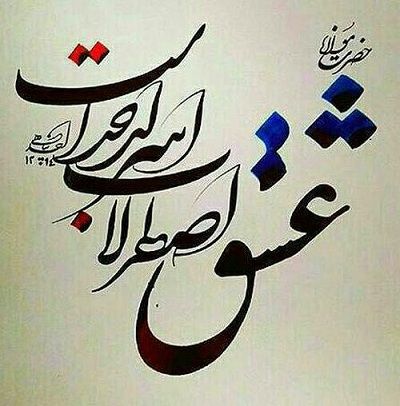
Persian calligraphy poetry collection cover

A gift for your journey

7 Timeless Persian Poems

Receive a curated poetry collection featuring Persian, English, and context — a gentle way to continue exploring Iran through language and memory.